
What Happens When the At-Fault Driver Has No Insurance in Illinois?
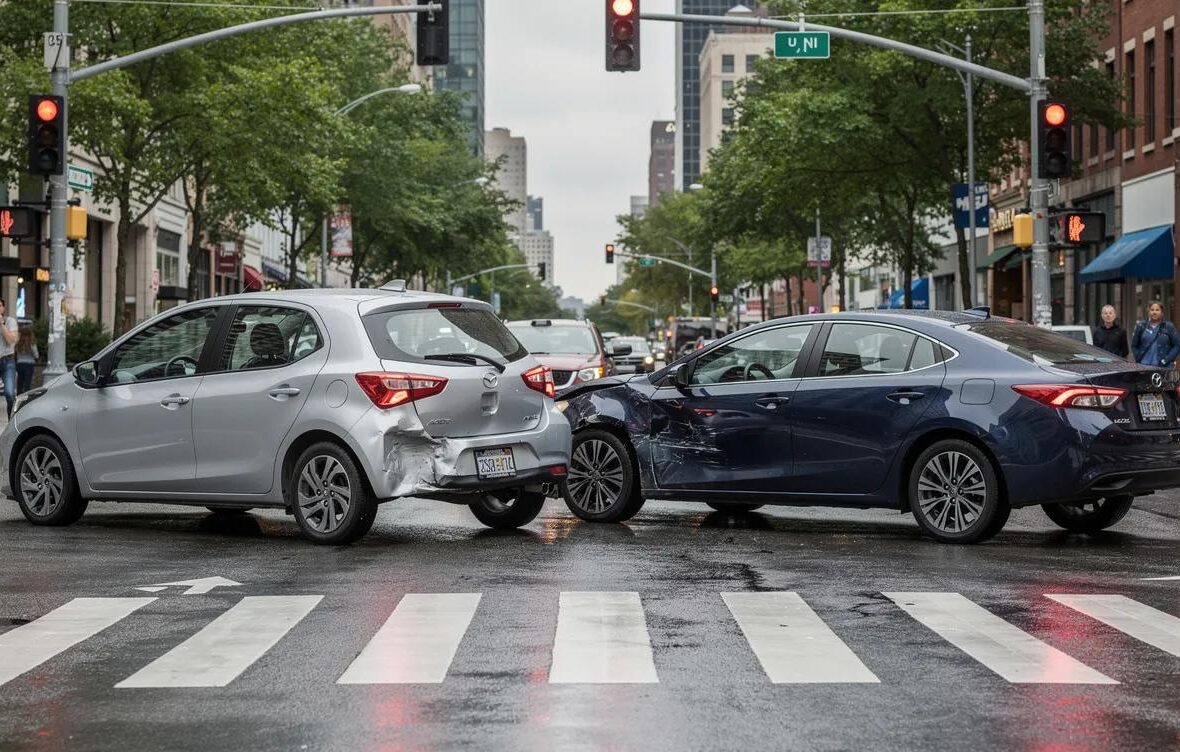
If an uninsured driver causes a car accident in Illinois, you may still be able to recover compensation for your injuries. Your own uninsured motorist coverage may provide protection, even though you did not cause the collision. Depending on the circumstances, other insurance policies or legally responsible parties may also be sources of recovery.
Imagine driving home from work when another vehicle runs a red light and crashes into your car. You suffer neck and back injuries, your vehicle is damaged, and your doctor recommends several weeks of physical therapy. Then you discover that the driver responsible for the accident has no automobile insurance.
Who will pay your medical bills? Can you recover lost wages? Does the uninsured driver remain responsible? Will your own insurance company compensate you?
These are important questions, especially when you are already dealing with pain, medical treatment, and unexpected financial expenses.
At Pinkston Law Group, P.C., we believe injured motorists should understand their legal rights before accepting an insurance company’s decision or assuming they have no options.
Here’s what Illinois drivers need to know about accidents involving uninsured motorists.
1. Is Car Insurance Required in Illinois?
Yes. Illinois law generally requires drivers to maintain automobile liability insurance.
Under 625 ILCS 5/7-601, owners generally may not operate or permit the operation of motor vehicles without the required liability coverage, subject to statutory exceptions.
For policies subject to the current minimum requirements, Illinois generally requires the following liability limits:
Illinois minimum automobile liability coverage
$25K
Bodily injury per person
$50K
Bodily injury per accident
$20K
Property damage per accident
Commonly described as 25/50/20 coverage. These are minimum liability limits, not guarantees of payment or a cap on the damages an injured person may establish.
Despite these requirements, some motorists drive without valid insurance. Others allow their policies to lapse because of missed payments or operate vehicles excluded from coverage.
When an uninsured driver causes an accident, the absence of insurance does not eliminate that driver’s potential legal responsibility.
However, it may make collecting compensation more complicated.
2. What Happens If an Uninsured Driver Causes Your Accident?
When another driver’s negligence causes a collision, that driver may be personally responsible for the resulting damages.
Ordinarily, the at-fault driver’s liability insurance provides a source of compensation, subject to the policy’s terms and limits.
When the driver has no applicable liability insurance, you may need to investigate other options.
These can include your uninsured motorist coverage, another applicable automobile policy, or a claim against an additional responsible party.
For example, if an uninsured driver caused an accident while performing job-related duties, the employer might also bear responsibility under certain circumstances.
However, an employer is not automatically responsible simply because the driver was employed. The relationship between the driver’s conduct and employment must be evaluated.
An investigation may also reveal that the vehicle owner maintained a separate policy or that the driver had insurance that applies despite an initial denial.
Before assuming there is no available coverage, it is important to identify every potentially applicable insurance policy.
3. What Is Uninsured Motorist Coverage?
Uninsured motorist coverage, commonly called UM coverage, is designed to protect insured individuals who suffer bodily injuries caused by certain uninsured motorists.
Illinois generally requires uninsured motorist bodily injury protection in automobile liability policies, subject to statutory requirements and exceptions.
UM coverage may apply when an at-fault driver has no applicable bodily injury liability insurance.
It may also apply to certain hit-and-run accidents, depending on the circumstances and policy provisions.
Suppose an uninsured driver rear-ends your vehicle at a stoplight. You sustain a shoulder injury requiring medical treatment and physical therapy.
If you have applicable UM coverage, you may be able to submit a bodily injury claim through your own insurance policy.
Your insurer then evaluates whether the uninsured driver was legally responsible, whether the accident caused your injuries, and the amount of covered damages.
Uninsured motorist coverage is not an automatic payment. Liability, causation, damages, policy limits, and applicable conditions still matter.
4. Will My Insurance Company Pay If the Other Driver Has No Insurance?
Possibly. The answer depends on your coverage and the nature of your losses.
Different types of automobile insurance provide different protections.
| Coverage | What it may cover |
|---|---|
| Uninsured motorist bodily injury | Covered bodily injuries caused by an uninsured motorist |
| Underinsured motorist bodily injury | Covered bodily injury losses when the responsible driver’s available liability coverage is insufficient, subject to applicable terms and limits |
| Collision coverage | Damage to your vehicle, subject to deductibles and policy conditions |
| Medical payments coverage | Certain medical expenses, if purchased and applicable |
| Health insurance | Covered medical treatment, subject to plan terms, cost sharing, and potential reimbursement rights |
It is important to distinguish bodily injury coverage from property damage coverage.
Uninsured motorist bodily injury coverage generally does not pay to repair your vehicle. Vehicle repairs may instead be addressed through collision coverage or another applicable source.
Review your insurance declarations page and policy to determine the coverage you purchased.
If you are uncertain about the available protection, an attorney can help you evaluate the policy.
5. What If Your Injuries Exceed Your Uninsured Motorist Coverage?
A serious accident can result in substantial medical expenses, lost income, permanent injuries, and ongoing treatment.
If your damages exceed your uninsured motorist policy limits, recovering additional compensation may be difficult, but other potential sources should be evaluated.
For example, a thorough investigation may identify another responsible driver, an employer whose conduct creates liability, or additional applicable insurance coverage.
In some circumstances, an injured person may also pursue a personal injury lawsuit against the uninsured driver directly.
However, obtaining a judgment and actually collecting money are different matters.
An uninsured driver may lack sufficient assets or income to satisfy a judgment. Illinois law also provides certain protections for exempt property and income.
For these reasons, an attorney should consider both potential liability and the practical ability to collect compensation.
An uninsured motorist claim may provide a more realistic recovery option than relying exclusively on a lawsuit against an individual with limited resources.
6. What If the Uninsured Driver Flees the Accident Scene?
Hit-and-run accidents present additional challenges because the responsible driver may never be identified.
Imagine returning to your parked vehicle and discovering substantial damage, or being struck by a vehicle whose driver leaves before police arrive.
When the fleeing driver cannot be identified, uninsured motorist coverage may provide protection for qualifying bodily injury claims.
However, not every hit-and-run accident automatically qualifies for uninsured motorist benefits.
Illinois law and insurance policy provisions may impose specific requirements concerning physical contact, reporting, notice, and evidence. The requirements can differ depending on the facts and the applicable coverage.
If you are involved in a hit-and-run collision, take these steps:
- Contact law enforcement promptly and provide any identifying information you have.
- Photograph vehicle damage, visible injuries, debris, and the surrounding scene.
- Identify witnesses and nearby businesses that may have surveillance cameras.
- Seek medical attention for injuries.
- Notify your insurer promptly and ask about applicable uninsured motorist requirements.
An attorney can help determine whether your policy provides coverage and whether the circumstances satisfy the applicable legal requirements.
7. What Happens If Your Own Insurance Company Denies Your Claim?
Many people assume that because they paid insurance premiums, their insurer will automatically approve an uninsured motorist claim.
Unfortunately, disputes can arise even when you are making a claim under your own policy.
An insurance company may question whether the uninsured driver caused the collision, whether your medical treatment was necessary, whether your injuries resulted from the accident, or whether the claimed damages are reasonable.
The insurer may also dispute whether the policy covers the accident or whether a particular exclusion applies.
For example, an insurance company might argue that your neck or back pain existed before the collision.
However, having a preexisting medical condition does not automatically prevent you from recovering compensation when an accident aggravates that condition.
If your uninsured motorist claim is denied or undervalued, request an explanation of the insurer’s position and preserve the relevant correspondence.
An attorney can review the policy, evaluate the denial, and determine what options are available.
Depending on the policy and circumstances, an uninsured motorist dispute may be resolved through negotiation, arbitration, or litigation.
8. Can You Sue the Uninsured Driver Personally?
Yes. A driver does not escape potential civil liability simply because the driver violated Illinois insurance requirements.
If another person’s negligence caused your injuries, you may have grounds to pursue a personal injury lawsuit.
To establish an ordinary negligence claim, the evidence generally must show that the defendant owed a duty of reasonable care, breached that duty, and caused legally compensable injuries.
However, before pursuing a lawsuit, it is important to consider whether the defendant has assets or income that could satisfy a judgment.
You should also evaluate available insurance coverage and the interaction between any lawsuit and uninsured motorist benefits.
Illinois generally provides a two-year statute of limitations for personal injury actions under 735 ILCS 5/13-202, subject to exceptions.
Uninsured motorist claims may also involve contractual notice requirements, arbitration provisions, and other deadlines that differ from the deadline for suing the driver.
Do not assume that you have two years to take every action required under your insurance policy.
9. What Compensation Can You Recover After an Accident With an Uninsured Driver?
Depending on the circumstances and available coverage, an injured person may be entitled to seek compensation for several categories of damages.
These may include past and future medical expenses, lost wages, reduced earning capacity, pain and suffering, disability, disfigurement, emotional distress, and loss of a normal life.
Consider someone who suffers a serious back injury after being struck by an uninsured motorist.
That person may need diagnostic imaging, physical therapy, specialist appointments, injections, or surgery.
The injury may also interfere with employment, sleep, household responsibilities, and recreational activities.
Those consequences may be relevant when determining legally compensable damages.
However, the amount recoverable through an uninsured motorist policy is subject to applicable coverage limits, policy terms, and Illinois law.
A claim’s value is not determined solely by the total medical bills. The nature of the injuries, evidence of causation, prognosis, and impact on daily life may also matter.
10. Should You Hire a Personal Injury Attorney for an Uninsured Motorist Claim?
Not every uninsured motorist claim requires an attorney. However, legal representation may be particularly important when injuries are serious, coverage is disputed, or an insurance company offers less than the claim may reasonably be worth.
An attorney can investigate the accident, determine whether other parties may be liable, review insurance policies, obtain medical documentation, and evaluate the damages.
Legal assistance may also be important when the insurer requests extensive medical records, questions a preexisting condition, or seeks a recorded statement.
At Pinkston Law Group, P.C., we understand that uninsured motorist accidents can be especially frustrating.
You may have followed the law, maintained your insurance, and driven responsibly—only to discover that the person who injured you failed to carry required coverage.
You deserve to understand the protection available under your policy and the legal options that may help you move forward.
Frequently Asked Questions About Uninsured Motorist Accidents in Illinois
Can I recover compensation if the driver who hit me has no insurance?
Yes, potentially. Applicable uninsured motorist coverage may provide compensation for bodily injuries caused by an uninsured driver. Other policies or responsible parties may also provide sources of recovery.
Will my insurance rates increase if I file an uninsured motorist claim?
Not necessarily. The effect of a claim on your premiums depends on applicable Illinois law, your policy, underwriting rules, and the circumstances. You should not assume that filing a claim automatically results in a rate increase.
What if the other driver has insurance but not enough to cover my injuries?
Underinsured motorist coverage may apply when the responsible driver’s available bodily injury liability coverage is insufficient and the statutory and policy requirements are satisfied. Underinsured motorist coverage is different from uninsured motorist coverage.
Can I recover compensation for pain and suffering?
Potentially. Pain and suffering may be included in a covered uninsured motorist bodily injury claim when supported by the evidence and recoverable under applicable law, subject to policy limits.
What if I was a passenger in a vehicle struck by an uninsured driver?
You may have access to uninsured motorist coverage through the vehicle you occupied or another applicable policy. Coverage priority, exclusions, and eligibility must be evaluated.
What if I was partially responsible for the accident?
Illinois’ modified comparative negligence rules may affect your recovery. In covered negligence actions, a plaintiff whose contributory fault exceeds 50% generally cannot recover, while lesser percentages reduce damages proportionally.
Injured by an Uninsured Driver? Pinkston Law Group, P.C. Can Help.
Discovering that the driver who caused your accident has no insurance can make an already stressful situation even more overwhelming.
You may be worried about medical bills, missed paychecks, vehicle repairs, and how you will support your family while recovering.
The other driver’s failure to carry insurance does not necessarily mean you are without legal options.
Attorney Danielle A. Pinkston and Pinkston Law Group, P.C. help injured individuals understand their rights under Illinois personal injury law.
Whether you were injured by an uninsured driver, involved in a hit-and-run accident, or facing a disputed uninsured motorist claim, our firm can review your circumstances and explain potential next steps.
Schedule Your Free 15-Minute Consultation
Pinkston Law Group, P.C.
Attorney Danielle A. Pinkston
Free 15-minute consultation
No attorney’s fee unless we recover compensation for you.
Case costs and expenses are governed by the written contingency-fee agreement.
Protect your rights. Explore your insurance coverage. Understand your legal options.
Advertising Material. This article is provided for general educational purposes and does not constitute legal advice or create an attorney-client relationship. Past results do not predict future outcomes. Every case depends on its particular facts, available evidence, applicable insurance coverage, and governing law.
Illinois Legal References
For the published article, link to the relevant Illinois statutes and authoritative insurance guidance:
These are the more precise links I recommend using on Pinkston Law Group’s website:
-
625 ILCS 5/7-203 — Minimum Insurance Limits. Illinois’s minimum limits are $25,000 per person, $50,000 per accident for bodily injury, and $20,000 for property damage.
Other Blog Posts
Posts You May Like
October 14, 2026
What Happens When the At-Fault Driver Has No Insurance in Illinois?
If an uninsured driver causes a car accident in Illinois,…
October 14, 2026
Who Is at Fault in a Rear-End Collision? Understanding Liability Under Illinois Law
Rear-end collisions are among the most common types of motor…
View All Blog Posts

We Will Fight For You
Contact Us To Discuss
Your Case

Advertising Material. This information is designed for general information only. The information presented should not be construed to be formal legal advice nor the formation of a lawyer/client relationship. Past results and testimonials are not a guarantee, warranty, or prediction of the outcome of your case, and should not be construed as such. Past results cannot guarantee future performance. Any result in a single case is not meant to create an expectation of similar results in future matters because each case involves many different factors, therefore, results will differ on a case-by-case basis. By providing contact information, users acknowledge and give explicit consent to be contacted via the methods of communication provided, including SMS. Message and data rates may apply. Message frequency may vary. Reply STOP to opt out.
Copyright 2026 All Rights Reserved | Accessibility Notice | Privacy Policy