
Who Is at Fault in a Rear-End Collision? Understanding Liability Under Illinois Law
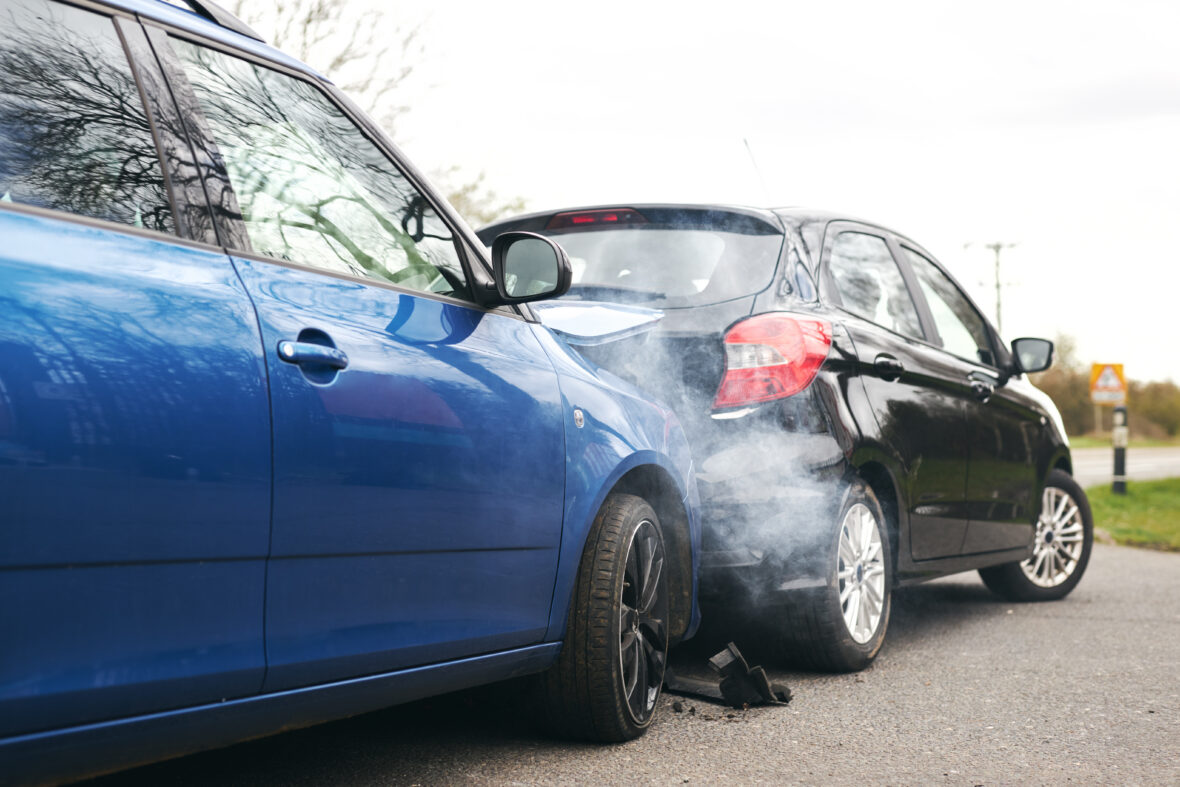
Although some rear-end accidents involve relatively minor vehicle damage, others result in serious injuries, substantial medical expenses, lost wages, and long-term physical limitations.
One of the first questions accident victims ask is: Who is responsible when one vehicle crashes into the back of another?
Many people assume that the driver who strikes another vehicle from behind is automatically at fault. While the rear driver is often responsible, determining liability is not always that simple.
Under Illinois law, fault depends on the circumstances surrounding the collision, the actions of each driver, and the available evidence.
At Pinkston Law Group, P.C., we believe injured motorists should understand their legal rights before accepting responsibility for an accident or agreeing to an insurance settlement.
If you have been injured in a rear-end collision in Chicago or elsewhere in Illinois, here is what you should know.
1. Is the Rear Driver Always at Fault?
The short answer is no.
Although the rear driver is frequently responsible for a rear-end collision, Illinois law does not automatically assign liability simply because one vehicle struck another from behind.
Drivers have a duty to operate their vehicles with reasonable care. This includes maintaining an appropriate following distance, paying attention to traffic conditions, controlling their speed, and responding to reasonably foreseeable hazards.
Illinois law specifically addresses following too closely.
Under 625 ILCS 5/11-710, drivers must not follow another vehicle more closely than is reasonable and prudent, considering the speed of traffic, road conditions, and surrounding circumstances.
When a driver follows another vehicle too closely and cannot stop in time, that conduct may support a finding of negligence.
However, determining liability requires examining the entire accident.
For example, if a driver suddenly reverses into another vehicle or makes an unsafe lane change immediately before braking, the circumstances may affect who is legally responsible.
The important distinction is that being the rear driver does not automatically establish negligence, and being the front driver does not automatically eliminate responsibility.
2. Common Causes of Rear-End Collisions
Rear-end accidents frequently occur because a driver fails to recognize or respond to changing traffic conditions.
Some of the most common causes include:
Distracted driving. A driver who is texting, checking GPS directions, eating, or looking away from the roadway may fail to notice that traffic has slowed or stopped.
Following too closely. Tailgating reduces the time available to react when the vehicle ahead brakes.
Speeding. Excessive speed increases stopping distance and may make it impossible to avoid a collision.
Driver fatigue. A tired driver may experience slower reaction times, reduced concentration, or impaired judgment.
Impaired driving. Alcohol, illegal drugs, and certain medications can affect perception, coordination, and the ability to respond appropriately.
Unsafe weather conditions. Rain, snow, ice, and reduced visibility may require drivers to reduce their speed and increase following distance.
Aggressive driving. Tailgating, excessive speeding, and sudden lane changes can create dangerous situations.
A rear-end collision may result from one or several of these factors.
Identifying the cause is important because the evidence must establish not merely that an accident occurred, but that another party’s negligent conduct caused the injuries for which compensation is sought.
3. What Happens When the Front Driver Slams on the Brakes?
One of the most common defenses raised after a rear-end accident is that the front driver stopped suddenly.
The rear driver may claim:
“The car in front of me slammed on its brakes, and I didn’t have enough time to stop.”
However, sudden braking does not automatically make the front driver responsible.
Drivers must anticipate that traffic may slow or stop unexpectedly, particularly near intersections, construction zones, pedestrian crossings, and congested roadways.
If the front driver brakes to avoid a pedestrian, respond to a traffic signal, or prevent another collision, the rear driver may still be responsible for failing to maintain a safe following distance.
On the other hand, if the front driver intentionally and unnecessarily brakes in a dangerous manner, sometimes called brake checking, that conduct may support an argument that the front driver was partially or primarily responsible.
Determining liability may require reviewing dashcam footage, witness statements, vehicle damage, and the sequence of events.
The reason for the sudden stop matters.
4. Can the Front Driver Be Partially Responsible?
Yes. Illinois follows a modified comparative negligence system.
Under 735 ILCS 5/2-1116, in negligence actions governed by that provision, an injured plaintiff generally may recover damages if the plaintiff’s contributory fault is not more than 50%.
However, the compensation awarded is reduced by the percentage of fault attributed to the plaintiff.
Consider the following example.
Example: How comparative negligence affects compensation
Total established damages
$100,000
Plaintiff’s percentage of fault
20%
Illustrative recoverable damages
$80,000
The hypothetical award is reduced by 20% for the plaintiff’s share of fault.
This is a simplified illustration, not a case valuation. Actual recovery depends on the evidence, applicable law, and other legal considerations.
Suppose a driver makes an unsafe lane change and is immediately struck from behind. A jury might determine that the front driver was 20% responsible and the rear driver was 80% responsible.
If the front driver sustained $100,000 in legally compensable damages, the award would be reduced to $80,000.
If the injured plaintiff’s fault exceeded 50%, recovery would generally be barred under the applicable modified comparative negligence rule.
This is one reason accident victims should be cautious about accepting an insurance company’s assessment of fault without reviewing the evidence.
5. What If the Rear Driver Claims You Stopped Too Suddenly?
Insurance companies sometimes attempt to shift blame to the driver who was struck.
An adjuster may argue that you stopped without warning, braked unnecessarily, or failed to maintain your vehicle properly.
These allegations do not automatically establish fault.
The evidence may show that you were lawfully stopped at a traffic light, slowing for traffic, or responding to a hazard.
Evidence that may help establish what occurred includes photographs of the accident scene, traffic camera footage, dashcam recordings, witness statements, vehicle damage, and available electronic vehicle data.
If the collision occurred at an intersection, the timing of the traffic signals may also be relevant.
An experienced personal injury attorney can evaluate the circumstances and determine whether the insurance company’s allegations are supported by credible evidence.
6. Who Is Responsible in a Multi-Vehicle Rear-End Collision?
Multi-vehicle accidents, sometimes called chain-reaction collisions, can present more complicated liability questions.
Imagine three vehicles stopped or traveling in the same lane.
The third vehicle crashes into the second vehicle, pushing it into the first vehicle.
In this situation, the driver of the third vehicle may be responsible for injuries and damage involving multiple vehicles.
However, the outcome can change if the second vehicle struck the first vehicle before being hit from behind.
Multiple drivers may also contribute to the collision through speeding, distracted driving, or following too closely.
Determining responsibility may require accident reconstruction, examination of vehicle damage, witness testimony, and electronic data.
In some cases, more than one driver may be legally responsible.
Do not assume that the vehicle directly behind yours is necessarily the only responsible party.
7. What Injuries Are Common in Rear-End Accidents?
Rear-end collisions can cause serious injuries even when the vehicles show limited visible damage.
The sudden force of impact may cause the occupant’s head and body to move rapidly, potentially injuring the neck, back, shoulders, or other parts of the body.
Common injuries include:
- Whiplash and other neck injuries
- Herniated or bulging discs
- Back and spinal injuries
- Concussions and traumatic brain injuries
- Shoulder and rotator cuff injuries
- Muscle strains and ligament injuries
- Nerve damage, numbness, and radiating pain
- Fractures and other orthopedic injuries
- Chronic pain and reduced mobility
Some symptoms appear immediately, while others develop over the following hours or days.
A person may initially experience mild discomfort but later develop persistent headaches, neck pain, or difficulty performing everyday activities.
It is important to seek appropriate medical care and report symptoms accurately.
The severity of an injury cannot reliably be determined from photographs of vehicle damage alone.
8. What Compensation Can You Recover After a Rear-End Collision?
If another driver’s negligence caused your injuries, Illinois law may allow you to seek compensation for economic and non-economic damages.
Economic damages may include medical expenses, rehabilitation costs, lost wages, reduced earning capacity, and reasonably established future medical expenses.
Non-economic damages may include physical pain and suffering, emotional distress, disability, disfigurement, and loss of a normal life.
For example, someone who suffers a serious shoulder injury may require surgery, physical therapy, and months away from work.
That person may also experience difficulty sleeping, caring for children, exercising, or participating in activities previously enjoyed.
These consequences may be relevant when evaluating damages.
However, no two personal injury claims are identical. Compensation depends on the nature and extent of the injuries, medical evidence, liability, causation, and other circumstances.
9. What Should You Do After Being Rear-Ended?
The steps you take after a rear-end collision can help protect both your health and your potential legal claim.
First, move to a safe location if possible and obtain emergency assistance when needed.
Contact law enforcement when appropriate, particularly if anyone is injured.
If you can safely do so, photograph the vehicles, visible damage, roadway, and surrounding traffic conditions.
Exchange identifying and insurance information with the other driver and obtain contact information from witnesses.
Seek medical attention promptly if you are injured or develop concerning symptoms.
Notify your insurance company as required by your policy, but be cautious about providing extensive recorded statements to the other driver’s insurer before understanding your rights.
Keep copies of medical records, bills, repair estimates, receipts, and communications concerning the accident.
Finally, consider consulting a personal injury attorney before accepting a settlement offer or signing a release.
Early investigation can be especially important when surveillance footage or other evidence may be lost.
10. How Long Do You Have to File a Rear-End Accident Lawsuit in Illinois?
In most Illinois personal injury cases, the general statute of limitations is two years from the date the cause of action accrues, pursuant to 735 ILCS 5/13-202.
However, exceptions may apply.
Claims involving governmental defendants may be subject to different and sometimes shorter deadlines. Special rules may also apply to minors and certain other circumstances.
Property damage claims may be governed by different limitation periods.
It is important not to confuse the deadline for filing a lawsuit with an insurance company’s internal claims process.
Continuing to negotiate with an adjuster generally does not extend the time available to file a lawsuit.
Waiting too long can also make it more difficult to locate witnesses, preserve video recordings, and obtain other important evidence.
For these reasons, obtaining legal advice soon after a serious accident may help protect your rights.
How Can a Personal Injury Attorney Help After a Rear-End Collision?
Although some minor accidents can be resolved directly through insurance, cases involving significant injuries, disputed liability, or inadequate settlement offers may require legal assistance.
An attorney can investigate how the collision occurred, evaluate the evidence, identify potentially responsible parties, and assess available insurance coverage.
Legal representation may also involve obtaining medical records, documenting lost income, consulting appropriate experts, negotiating with insurance companies, and filing a lawsuit when necessary.
When an insurer claims that the injured person contributed to the collision, an attorney can examine whether that allegation is supported by the facts.
At Pinkston Law Group, P.C., we recognize that a rear-end collision can affect far more than your vehicle.
It may affect your ability to work, care for your family, enjoy daily activities, and maintain financial stability.
Our goal is to help injured individuals understand their rights and pursue the compensation available under Illinois law.
Frequently Asked Questions About Rear-End Collisions
Is the driver who rear-ends another vehicle automatically responsible?
No. Although the rear driver is often negligent, fault must be determined from the circumstances and evidence.
Can I recover compensation if I was partially responsible?
Potentially. Under Illinois’ modified comparative negligence rule, recovery generally remains possible when the plaintiff’s contributory fault does not exceed 50%, subject to the law applicable to the claim.
Can I file a claim if my vehicle has only minor damage?
Yes, if you can establish negligence, causation, and legally compensable injuries or losses. Minor vehicle damage does not automatically rule out a significant injury.
What if I had a preexisting neck or back condition?
A preexisting condition does not automatically prevent recovery. Depending on the evidence, you may be able to recover damages when an accident aggravates that condition.
Do I have to go to court to receive compensation?
Not necessarily. Many personal injury claims resolve through settlement, although litigation may be necessary when liability or damages remain disputed.
Injured in a Rear-End Collision? Contact Pinkston Law Group, P.C.
Being rear-ended can leave you with painful injuries, unexpected expenses, and unanswered questions about who is responsible.
You should not have to accept an insurance company’s determination of fault without understanding your rights.
If you or a loved one has been injured in a rear-end collision in Chicago or elsewhere in Illinois, Attorney Danielle A. Pinkston and Pinkston Law Group, P.C. are available to discuss your circumstances.
Whether you were struck while stopped at a red light, injured in a chain-reaction collision, or involved in an accident with a commercial vehicle, our firm can evaluate your potential claim and explain your legal options.
Schedule Your Free 15-Minute Consultation
Pinkston Law Group, P.C.
Attorney Danielle A. Pinkston
No attorney’s fee unless we recover compensation for you.
Case costs and expenses are governed by the written contingency-fee agreement.
Protect your rights. Understand your options. Take the next step toward recovery.
Advertising Material. This article is intended for general educational purposes and does not constitute legal advice. Reading this article does not establish an attorney-client relationship. Past results do not predict future outcomes. Every case is evaluated based on its individual facts and applicable law.
Illinois Legal References
- 625 ILCS 5/11-710 — Following Too Closely
- 735 ILCS 5/2-1116 — Modified Comparative Negligence
- 735 ILCS 5/13-202 — Personal Injury Statute of Limitations
Other Blog Posts
Posts You May Like
October 14, 2026
What Happens When the At-Fault Driver Has No Insurance in Illinois?
If an uninsured driver causes a car accident in Illinois,…
October 14, 2026
Who Is at Fault in a Rear-End Collision? Understanding Liability Under Illinois Law
Rear-end collisions are among the most common types of motor…

View All Blog Posts

We Will Fight For You
Contact Us To Discuss
Your Case

Advertising Material. This information is designed for general information only. The information presented should not be construed to be formal legal advice nor the formation of a lawyer/client relationship. Past results and testimonials are not a guarantee, warranty, or prediction of the outcome of your case, and should not be construed as such. Past results cannot guarantee future performance. Any result in a single case is not meant to create an expectation of similar results in future matters because each case involves many different factors, therefore, results will differ on a case-by-case basis. By providing contact information, users acknowledge and give explicit consent to be contacted via the methods of communication provided, including SMS. Message and data rates may apply. Message frequency may vary. Reply STOP to opt out.
Copyright 2026 All Rights Reserved | Accessibility Notice | Privacy Policy