
Can You Sue If You Were Partially Responsible for an Accident in Illinois?
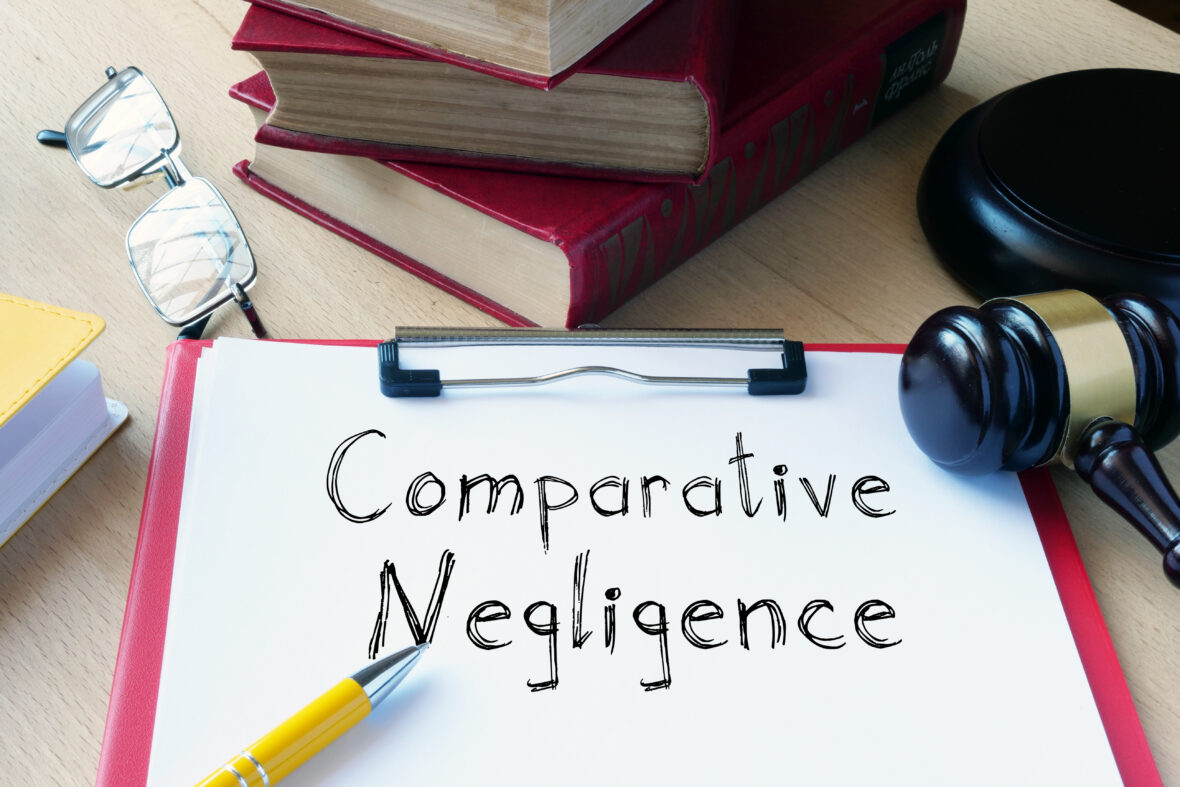
Can You Sue If You Were Partially Responsible for an Accident in Illinois?
Yes. In Illinois, you may still be able to recover compensation after a car accident even if you were partially responsible for causing it. Under Illinois’ modified comparative negligence law, an injured person generally may recover damages in a covered negligence action as long as their percentage of fault does not exceed 50%. However, their compensation is reduced by the percentage of fault attributed to them.
Imagine driving through an intersection when another vehicle strikes your car. The other driver was speeding, but you may have been traveling slightly above the posted speed limit.
Does that mean you cannot recover compensation for your injuries?
Or suppose you were involved in a rear-end collision, and the insurance company claims you contributed to the accident by stopping too suddenly.
Does sharing some responsibility automatically prevent you from filing a personal injury lawsuit?
Not necessarily.
Determining fault after an accident is often more complicated than deciding which driver received a traffic citation. Multiple drivers may contribute to a collision, and insurance companies may attempt to shift responsibility to reduce the amount they must pay.
At Pinkston Law Group, P.C., we believe injured individuals should understand their rights before accepting an insurance company’s determination of fault or agreeing to a settlement.
Here is what you should know about partial fault, comparative negligence, and your right to seek compensation under Illinois law.
1. What Is Comparative Negligence in Illinois?
Comparative negligence is a legal principle used to determine how responsibility for an accident affects an injured person’s ability to recover damages.
In some accidents, one party is entirely responsible. In others, the actions of two or more people contribute to the collision.
Illinois follows a system known as modified comparative negligence.
Under 735 ILCS 5/2-1116, in negligence actions governed by the statute, an injured plaintiff generally may recover compensation if their contributory fault is not more than 50% of the proximate cause of the injury or damage.
If the plaintiff’s fault exceeds 50%, recovery is generally barred.
When the plaintiff’s fault is 50% or less, the damages awarded are reduced proportionally.
For example, if a jury determines that you sustained $100,000 in damages but were 20% responsible for the accident, your damages would be reduced to $80,000.
This means that admitting some responsibility—or being accused of contributing to an accident—does not necessarily eliminate your legal rights.
However, comparative negligence rules can differ for certain claims, so the applicable law must be evaluated based on the circumstances.
2. How Does Illinois’ 50% Fault Rule Work?
Illinois’ modified comparative negligence system uses an important threshold.
Illustration: How partial fault affects your compensation
Assume $100,000 in proven damages and a negligence claim governed by 735 ILCS 5/2-1116.
Your percentage of fault
25%
Total established damages
$100,000
Illustrative recoverable damages
$75,000
The hypothetical award is reduced by 25% for the plaintiff’s share of responsibility.This illustration is not a prediction of any settlement or verdict. Actual recovery depends on the evidence, applicable law, and other case-specific factors.
The distinction between 50% and 51% fault can be extremely important.
A plaintiff found exactly 50% responsible may generally recover the remaining 50% of established damages under the statute.
A plaintiff found 51% responsible generally cannot recover damages under that rule.
Because even a small difference in fault allocation can substantially affect recovery, liability disputes deserve careful investigation.
3. Who Determines the Percentage of Fault?
An insurance adjuster may initially assign percentages of responsibility when evaluating a claim.
However, the insurance company’s assessment is not a binding legal determination.
If a lawsuit proceeds to trial, the finder of fact—often a jury—may determine whether the parties were negligent and how responsibility should be allocated, subject to applicable law and the court’s instructions.
The evidence used to evaluate fault may include police reports, photographs, witness testimony, surveillance footage, dashcam recordings, electronic vehicle data, and accident reconstruction analysis.
For example, an insurance company might claim that you were 40% responsible for a collision because you were driving above the speed limit.
However, the evidence may establish that the other driver failed to yield and that your speed did not contribute to causing the accident.
Simply violating a traffic rule does not automatically establish that the violation caused the collision.
Fault must be evaluated in relation to the conduct that proximately caused the injuries or damage.
4. What Are Common Examples of Shared Fault in Car Accidents?
Several types of accidents may involve allegations that more than one driver contributed to the collision.
Intersection accidents. One driver may fail to yield while another travels at an unsafe speed.
Rear-end collisions. The rear driver may follow too closely, while the front driver may be accused of making an unsafe maneuver or intentionally braking without justification.
Lane-change accidents. One driver may change lanes without checking a blind spot while another is speeding.
Left-turn accidents. A turning driver may fail to yield, while an approaching driver may contribute through excessive speed or other negligent conduct.
Parking lot collisions. Two drivers may reverse simultaneously without adequately checking their surroundings.
Pedestrian accidents. A motorist may fail to exercise reasonable care while a pedestrian may also be accused of failing to follow applicable traffic controls.
These examples do not establish that fault is necessarily shared. Each case depends on the facts, the applicable duties, and whether the conduct caused the accident.
5. Can You Recover Compensation If You Received a Traffic Ticket?
Yes, potentially.
Receiving a traffic citation does not automatically prevent you from pursuing a personal injury claim.
A citation may be relevant to the investigation, but it does not independently establish every element of civil liability.
For example, suppose you receive a speeding ticket after another driver runs a stop sign and strikes your vehicle.
The fact that you were speeding may be considered, but the investigation must still determine whether your speed contributed to the collision and, if so, to what extent.
Similarly, the other driver’s failure to receive a citation does not necessarily mean that driver was free from negligence.
Civil liability and traffic enforcement involve different legal questions.
An attorney can review the evidence, applicable traffic laws, and circumstances surrounding the citation.
6. What If the Insurance Company Says You Were Mostly Responsible?
Insurance companies may dispute liability to reduce or deny claims.
For example, an adjuster may assert that you were 60% responsible for an accident and therefore are not entitled to compensation.
However, that percentage may reflect the insurer’s position rather than an objective or final determination.
Before accepting an allegation of comparative negligence, consider what evidence supports it.
Were there independent witnesses? Does video footage show how the collision occurred? Are the vehicle damage patterns consistent with the drivers’ accounts?
Did the other driver violate a traffic law or fail to exercise reasonable care?
A thorough investigation may reveal that the insurer’s allocation of fault is unsupported or incomplete.
You do not have to accept an insurance adjuster’s opinion simply because the adjuster assigns a percentage of responsibility to you.
An attorney can evaluate whether the evidence supports the insurer’s position and advocate for an appropriate determination of liability.
7. Can You Still Recover Damages If You Were 50% Responsible?
Under Illinois’ modified comparative negligence statute, a plaintiff whose fault is exactly 50% generally may recover damages in an action governed by that statute.
However, the award is reduced by the plaintiff’s percentage of responsibility.
Suppose you are involved in a collision and the jury determines that both drivers were equally responsible.
If your proven damages total $200,000, a 50% reduction would result in a $100,000 award before consideration of other applicable legal issues.
If your fault were determined to be 51%, recovery would generally be barred under the statute.
This is why a dispute over even a small percentage of responsibility can have significant financial consequences.
8. What Damages Can You Recover When You Share Fault?
If you are eligible to recover compensation despite partial responsibility, the same general categories of legally compensable damages may be available.
These may include:
- Past and future medical expenses
- Lost wages and diminished earning capacity
- Physical pain and suffering
- Emotional distress
- Disability and disfigurement
- Loss of a normal life
- Other accident-related losses recognized by Illinois law
For example, an injured person may require surgery, rehabilitation, and several months away from work.
That person may also experience difficulty caring for children, maintaining household responsibilities, or participating in recreational activities.
The total legally compensable damages are evaluated based on the evidence and then reduced by the applicable percentage of contributory fault.
However, recovery may also be affected by insurance limits, coverage disputes, other legal rules, and the financial resources of responsible parties.
A comparative negligence calculation does not guarantee that the full adjusted amount will be collectible.
9. What Evidence Can Help Prove the Other Driver Was More Responsible?
Evidence plays a central role in disputes involving shared fault.
Photographs may establish vehicle positions, damage patterns, roadway conditions, and traffic signs.
Video footage may show whether a driver failed to yield, entered an intersection improperly, or made an unsafe lane change.
Witness testimony can provide an independent account of the accident.
Medical records can help connect the collision to the injuries being claimed.
In more complicated cases, accident reconstruction experts may analyze vehicle movements, speeds, braking, and collision dynamics.
It is important to preserve evidence as early as possible because surveillance recordings may be overwritten and witnesses’ memories can fade.
If you are physically able to do so safely, document the accident scene and obtain witness information.
An attorney can also pursue available evidence through appropriate preservation requests and the legal discovery process.
10. How Can a Personal Injury Attorney Help When Fault Is Disputed?
Cases involving comparative negligence often require more than submitting medical bills to an insurance company.
The central dispute may concern how the accident happened and whether the injured person contributed to causing it.
An attorney can investigate the collision, evaluate police reports, obtain relevant evidence, interview witnesses, and assess whether expert testimony may be necessary.
Legal representation can also involve reviewing the applicable insurance policies, documenting injuries and damages, negotiating with insurers, and filing a lawsuit when appropriate.
When an insurance company attempts to assign an unreasonable percentage of fault to an injured person, a careful investigation can be especially important.
At Pinkston Law Group, P.C., we understand that accidents do not always involve simple questions of right and wrong.
Our firm evaluates the available evidence and helps injured individuals understand how Illinois law may affect their right to compensation.
Think You Were Partially at Fault for an Accident? Don’t Let That Stop You From Pursuing Compensation.
You may be partially responsible for an accident and still have a valid personal injury claim under Illinois law.
After a car accident, it is easy to second-guess yourself. Perhaps you were driving slightly above the speed limit, failed to notice another vehicle, or received a traffic citation. Maybe the insurance company has already told you that you were partially responsible for the collision.
But an insurance company’s determination of fault is not the final word on your legal rights.
Under Illinois’ modified comparative negligence law, you may still recover compensation if you were 50% or less responsible for the accident, provided the other requirements for recovery are satisfied. Your compensation is generally reduced by your percentage of fault.
Even if you made a mistake, another driver’s negligence may have contributed to your injuries—and you should not automatically be responsible for all the resulting financial losses.
Before You Accept Blame, Accept a Settlement, or Give Up on Your Claim, Speak With an Attorney. At Pinkston Law Group, P.C., Attorney Danielle A. Pinkston understands that determining fault is not always straightforward. Insurance companies may attempt to shift responsibility, minimize the severity of your injuries, or offer a settlement that does not fully account for your damages.Whether you were injured in a rear-end collision, intersection accident, lane-change collision, or another motor vehicle accident in Chicago or elsewhere in Illinois, our firm can evaluate the circumstances surrounding your accident, review the available evidence, assess the potential liability of all involved parties, and explain how Illinois’ comparative negligence law may affect your right to compensation.Depending on the circumstances, you may be entitled to recover damages for medical expenses, lost wages, pain and suffering, loss of a normal life, and other legally compensable losses.
You Don’t Have to Determine Who Was at Fault Before Calling Us.
That is part of what an attorney can help you evaluate.Do not assume that a traffic ticket, an insurance adjuster’s opinion, or your own uncertainty means you have no case. And do not allow concerns about partial responsibility to prevent you from exploring your legal options.Your injuries deserve to be taken seriously, and your potential claim deserves a thorough evaluation.
Schedule Your FREE 15-Minute Consultation Today!
If you were injured in a car accident and believe you may have been partially at fault, contact Pinkston Law Group, P.C. to discuss your circumstances.The sooner you understand your rights, the sooner you can make informed decisions about your claim.Your Rights Matter. Your Injuries Matter. And Your Recovery Matters.Advertising Material. This article is provided for general educational purposes and does not constitute legal advice or create an attorney-client relationship. Past results do not predict future outcomes. Every case depends on its specific facts, evidence, and applicable law.
Other Blog Posts
Posts You May Like
November 17, 2026
Can You Be Fired for Refusing to Violate the Law in Illinois?
By Attorney Danielle A. Pinkston | Pinkston Law Group, P.C.…
November 16, 2026
Can You Sue if Your Employer Forces You to Resign in Illinois?
Understanding Constructive Discharge, Forced Resignation, Workplace Retaliation, and Wrongful Termination…

November 13, 2026
What Is Constructive Discharge in Illinois? Can You Sue if Your Employer Forces You to Resign?
By Attorney Danielle A. Pinkston | Pinkston Law Group, P.C.…
View All Blog Posts

We Will Fight For You
Contact Us To Discuss
Your Case

Advertising Material. This information is designed for general information only. The information presented should not be construed to be formal legal advice nor the formation of a lawyer/client relationship. Past results and testimonials are not a guarantee, warranty, or prediction of the outcome of your case, and should not be construed as such. Past results cannot guarantee future performance. Any result in a single case is not meant to create an expectation of similar results in future matters because each case involves many different factors, therefore, results will differ on a case-by-case basis. By providing contact information, users acknowledge and give explicit consent to be contacted via the methods of communication provided, including SMS. Message and data rates may apply. Message frequency may vary. Reply STOP to opt out.
Copyright 2026 All Rights Reserved | Accessibility Notice | Privacy Policy