
Can Your Employer Fire You While You Are on Medical Leave in Illinois?
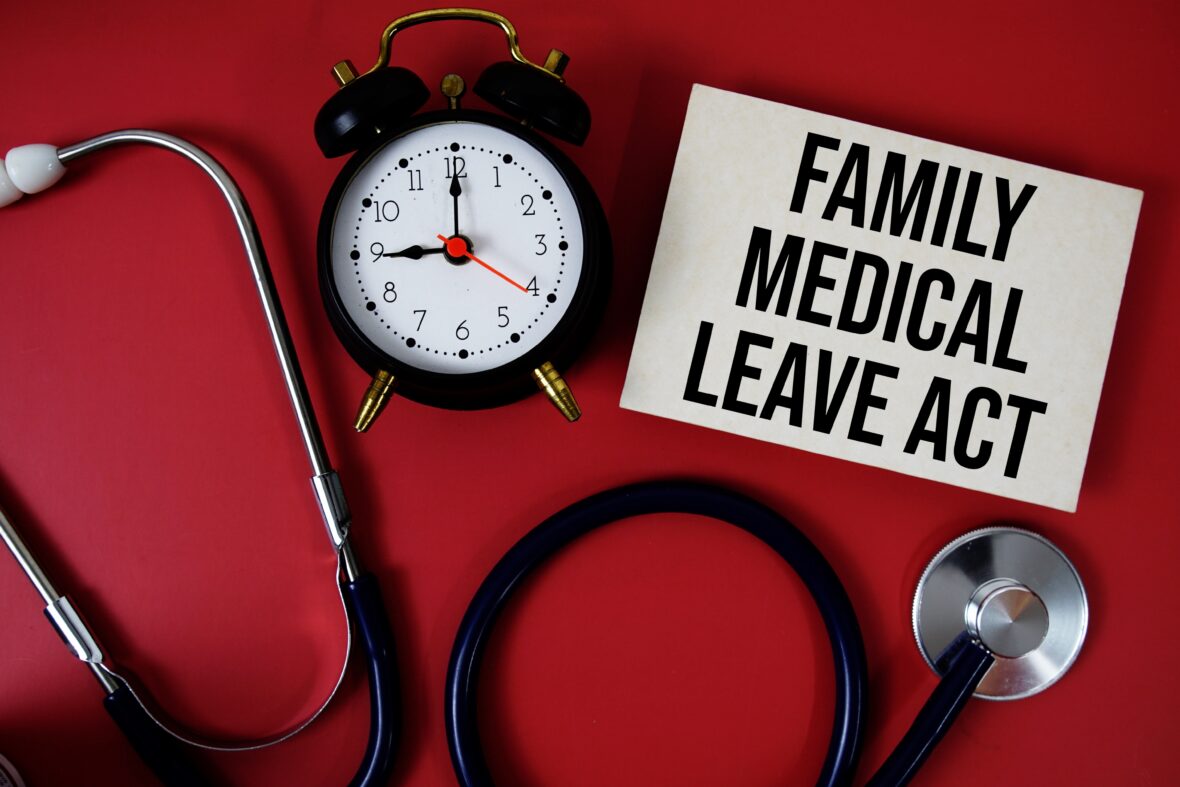
Understanding FMLA Protections, Disability Discrimination, Medical Leave Retaliation, and Wrongful Termination
By Attorney Danielle A. Pinkston | Pinkston Law Group, P.C.
Imagine waking up in a hospital after undergoing surgery.
Your doctor explains that you will need several weeks to recover before returning to work.
You notify your employer, submit the required medical documentation, and receive approval for medical leave.
You believe your job is protected while you focus on recovering.
Then, unexpectedly, Human Resources contacts you.
Your employer informs you that your position has been eliminated, your performance was unsatisfactory, or the company can no longer hold your job.
Can your employer legally fire you while you are on medical leave in Illinois?
The answer depends on the circumstances.
Federal and Illinois laws provide important protections for qualifying employees who need medical leave. However, being on medical leave does not automatically prevent an employer from making every employment decision.
A termination may be unlawful if an employer fires an employee because the employee exercised protected medical leave rights, requested a reasonable disability accommodation, or engaged in other legally protected conduct.
Understanding these protections is essential when evaluating a potential wrongful termination lawsuit.
1. Can Your Employer Fire You While You Are on Medical Leave?
An employer may sometimes lawfully terminate an employee during medical leave.
However, an employer generally cannot terminate an employee because the employee exercised rights protected by the Family and Medical Leave Act (FMLA) or because of disability discrimination prohibited by applicable law.
For example, an employer cannot lawfully fire an eligible employee merely for taking qualifying FMLA leave.
But if an employer conducts a genuine reduction in force unrelated to the employee’s leave, the termination may be lawful.
The critical question is whether the employer would have made the same employment decision if the employee had not taken protected leave.
2. What Is the Family and Medical Leave Act?
The FMLA is a federal law that provides eligible employees of covered employers with qualifying unpaid, job-protected leave.
Eligible employees generally may take up to 12 workweeks of FMLA leave during the applicable 12-month period for qualifying reasons, including their own serious health condition.
Other qualifying reasons include caring for certain family members with serious health conditions, childbirth, and certain family-related circumstances.
The FMLA also provides special military-related leave protections.
The law generally requires continuation of group health benefits under applicable conditions and provides job-restoration rights when the employee returns from protected leave.
However, not every employee or employer is covered by the FMLA.
3. Who Qualifies for FMLA Leave in Illinois?
An employee generally must satisfy several requirements to qualify for FMLA leave.
These typically include:
- Working for a covered employer.
- Having worked for the employer for at least 12 months.
- Having completed at least 1,250 hours of service during the preceding 12 months.
- Working at a location where the employer has at least 50 employees within 75 miles.
Private employers generally are covered if they employed at least 50 employees during 20 or more workweeks in the current or preceding calendar year.
Public agencies and qualifying schools are subject to different coverage rules.
Employees should not assume that every medical absence automatically qualifies for FMLA protection.
4. What Medical Conditions Qualify for FMLA Leave?
The FMLA protects qualifying leave for a serious health condition that makes an employee unable to perform the functions of the employee’s job.
Examples may include:
- Recovery from certain surgeries.
- Hospitalization.
- Serious illnesses requiring continuing treatment.
- Certain chronic medical conditions.
- Qualifying mental health conditions.
- Pregnancy-related medical conditions.
- Other serious health conditions meeting FMLA requirements.
A medical condition does not necessarily qualify merely because an employee is sick or visits a doctor.
The condition must satisfy the applicable legal definition.
5. Can Your Employer Fire You While You Are on Approved FMLA Leave?
An employer generally cannot lawfully terminate an employee because the employee took protected FMLA leave.
The FMLA prohibits interference with qualifying rights and retaliation for exercising those rights.
For example, imagine an employee undergoes surgery and receives approved FMLA leave.
Two weeks later, the employer fires the employee because the supervisor is frustrated about covering the employee’s shifts.
That termination may violate the FMLA.
However, an employer may defend a termination by establishing a legitimate reason unrelated to the protected leave.
The employee’s FMLA status does not create absolute immunity from termination.
6. Can Your Employer Fire You During Medical Leave if You Are Not Eligible for FMLA?
Potentially, yes—but other legal protections may apply.
An employee who does not qualify for FMLA leave may still have rights under the Americans with Disabilities Act (ADA), the Illinois Human Rights Act, or another applicable law.
For example, an employee with a qualifying disability may be entitled to reasonable accommodation.
In certain circumstances, a finite period of medical leave may be a reasonable accommodation.
However, whether leave is required depends on the employee’s condition, the essential functions of the job, the employer’s obligations, and whether the accommodation would impose an undue hardship.
7. What Is the Americans with Disabilities Act?
The ADA prohibits covered employers from discriminating against qualified individuals because of disability.
The law also requires reasonable accommodation for qualifying employees and applicants, absent undue hardship.
A reasonable accommodation may include modifications to workplace policies, equipment, schedules, or certain leave arrangements.
For example, an employee recovering from surgery may request additional unpaid leave as a disability accommodation.
An employer generally must evaluate an appropriate accommodation request under the applicable legal standards.
However, the ADA does not automatically require indefinite leave or eliminate essential job functions.
8. Can Your Employer Fire You for Requesting Medical Leave as an Accommodation?
An employer cannot lawfully retaliate against an employee for engaging in activity protected by the ADA.
Requesting a reasonable accommodation may constitute protected activity.
For example, an employee who requests a medically necessary schedule adjustment or finite leave extension may have protections against retaliation.
If the employer terminates the employee because the employee requested a legally protected accommodation, the employee may have a claim.
However, an accommodation request does not automatically prevent an employer from taking legitimate employment actions unrelated to the request.
9. Can Your Employer Fire You After Your FMLA Leave Runs Out?
Potentially.
The FMLA generally provides a limited amount of protected leave.
Once an employee exhausts available FMLA leave, the FMLA does not automatically guarantee additional time off.
However, an employer should consider whether another law requires additional protection.
For example, a qualifying employee may request a finite period of additional leave as a reasonable accommodation under the ADA.
An employer should evaluate that request under the applicable standards before assuming that FMLA exhaustion automatically permits termination.
Not every request for extended leave must be granted.
10. Can Your Employer Replace You While You Are on Medical Leave?
An employer may arrange temporary coverage while an employee is absent.
However, the FMLA generally provides eligible employees returning from protected leave with the right to restoration to the same position or an equivalent position, subject to statutory exceptions.
An equivalent position generally must have equivalent pay, benefits, and other employment terms and conditions.
For example, an employer ordinarily cannot avoid its restoration obligations simply by hiring a replacement during protected leave.
However, the FMLA does not provide greater job protection than the employee would have had if continuously employed.
11. Can Your Employer Lay You Off While You Are on Medical Leave?
A genuine layoff may lawfully affect an employee who is on medical leave.
For example, an employer may eliminate an entire department for legitimate financial reasons.
If the employee’s position would have been eliminated regardless of protected leave, the termination may be lawful.
However, an employer cannot use a purported layoff to conceal unlawful retaliation or disability discrimination.
Relevant evidence may include the timing of the layoff, the employer’s selection criteria, and how other employees were treated.
12. Can Your Employer Fire You for Missing Work Because of a Medical Condition?
The answer depends on whether the absences are legally protected and the circumstances surrounding the employment decision.
An employer generally cannot count protected FMLA leave against an employee under a no-fault attendance policy in a manner prohibited by the FMLA.
Similarly, certain absences may implicate disability accommodation obligations.
However, not every medical absence is protected.
Employees should follow applicable notice and certification requirements and communicate with their employers about qualifying leave or accommodation needs.
13. Can Your Employer Demand Medical Documentation?
Employers may request certain medical certifications and documentation permitted by applicable law.
For example, the FMLA allows covered employers to request medical certification supporting qualifying leave.
The ADA also permits limited medical inquiries in certain circumstances.
However, employers do not have unrestricted rights to an employee’s entire medical history.
Medical information obtained through employment-related processes may be subject to confidentiality requirements.
Employees should provide legally required information while understanding the scope of permissible employer requests.
14. What if Your Employer Claims You Were Fired for Poor Performance?
Employers sometimes cite poor performance, attendance issues, or restructuring as reasons for termination during medical leave.
Those explanations are not automatically unlawful.
However, the evidence may reveal that the employer’s stated reason was not genuine.
Relevant questions include:
- Did the employee receive positive evaluations before requesting leave?
- Did discipline begin after the employee disclosed a medical condition?
- Did supervisors complain about the employee’s absence?
- Did the employer count protected leave as an attendance violation?
- Were similarly situated employees treated differently?
- Did the employer provide inconsistent explanations for termination?
Evidence that the stated explanation is pretextual may support an employment claim.
15. Can You Sue for Wrongful Termination After Medical Leave?
Potentially.
Depending on the circumstances, an employee may have claims involving:
FMLA interference: An employer improperly denied, restrained, or interfered with protected FMLA rights.
FMLA retaliation: An employer took prohibited action because the employee exercised protected FMLA rights.
ADA discrimination: An employer terminated a qualified employee because of disability.
Failure to accommodate: An employer failed to provide a legally required reasonable accommodation.
ADA retaliation: An employer retaliated against an employee for protected accommodation-related activity.
Illinois Human Rights Act violations: An employee experienced discrimination or retaliation prohibited by Illinois law.
Each claim has separate legal requirements.
16. What Damages Can You Recover?
The available remedies depend on the claim.
Under the FMLA, qualifying remedies may include lost wages, lost benefits, interest, liquidated damages, and appropriate equitable relief.
The FMLA does not generally authorize emotional distress or punitive damages.
Under qualifying ADA or Illinois Human Rights Act claims, different remedies may be available.
Depending on the legal theory, remedies may include back pay, reinstatement, front pay, compensatory damages, and attorney’s fees.
Certain claims may also permit punitive damages where authorized.
Not every remedy is available under every law.
17. How Long Do You Have to File a Claim?
Filing deadlines vary by statute.
FMLA: Generally two years from the violation, or three years for a willful violation.
ADA: Many Illinois employees generally must file an EEOC charge within 300 days of the challenged employment action.
Illinois Human Rights Act: For many violations occurring on or after January 1, 2025, the general administrative charge deadline is two years, subject to applicable exceptions.
Employees should not assume that an internal HR complaint, medical leave appeal, or severance negotiation extends these deadlines.
Prompt legal evaluation is important.
18. What Evidence Can Help Prove Medical Leave Retaliation?
Employees should preserve relevant evidence they are legally authorized to possess.
Important documentation may include:
- Medical leave requests.
- FMLA approval or denial notices.
- Medical certifications and restrictions.
- Accommodation requests.
- Communications with Human Resources.
- Performance evaluations.
- Attendance records.
- Termination letters.
- Relevant supervisor statements.
- Records of lost wages and benefits.
- Witness information.
A detailed timeline may help establish the relationship between the protected leave and termination.
19. What Should You Do if You Are Fired While on Medical Leave?
If your employer terminates your employment during medical leave, consider these steps:
-
Request written confirmation of the termination and the employer’s stated reason.
-
Preserve your leave approval, medical certification, and accommodation records.
-
Document when the employer learned about your medical condition or leave request.
-
Keep relevant emails, messages, and performance evaluations.
-
Identify witnesses with knowledge of the termination decision.
-
Preserve evidence of lost wages and benefits.
-
Review any severance agreement before signing.
-
Consult an Illinois employment attorney promptly.
Avoid improperly accessing employer systems or removing confidential records.
20. Can Your Employer Fire You While You Are on Medical Leave? The Bottom Line
Yes, an employer may sometimes lawfully terminate an employee during medical leave—but not because the employee exercised protected leave rights or because of unlawful disability discrimination.
The FMLA, ADA, and Illinois Human Rights Act may provide overlapping protections.
However, each law has separate coverage requirements, legal standards, deadlines, and remedies.
If you were fired while on medical leave, the employer’s stated reason, the timing of the termination, and the available evidence may help determine whether you have a legal claim.
Let an Experienced Chicago Employment Attorney Advocate for You
At Pinkston Law Group, P.C., Attorney Danielle A. Pinkston represents employees in wrongful termination, workplace retaliation, discrimination, and related employment disputes.
If you were fired while on medical leave, denied qualifying leave, or terminated after requesting a disability accommodation, our firm can evaluate the circumstances and explain your potential legal options.
Schedule an Employment Law Consultation
Pinkston Law Group, P.C.
Attorney Danielle A. Pinkston
30 N. Michigan Ave. Ste. #1004, Chicago, IL 60602
Phone: 773-770-4771
Know Your Rights. Protect Your Career. Understand Your Legal Options.
Advertising Material.
Disclaimer: This article provides general educational information and does not constitute legal advice. Reading it does not establish an attorney-client relationship. Legal rights, remedies, and filing deadlines depend on individual circumstances and applicable law. Past results do not predict future outcomes.
Other Blog Posts
Posts You May Like
November 06, 2026
Can Your Employer Fire You While You Are on Medical Leave in Illinois?
Understanding FMLA Protections, Disability Discrimination, Medical Leave Retaliation, and Wrongful…
November 05, 2026
Can You Be Fired for Reporting Illegal Workplace Conduct in Illinois?
Understanding Whistleblower Protection, Workplace Retaliation, and Your Rights Under Illinois…

November 04, 2026
Can You Sue Your Employer for Wrongful Termination in Illinois?
Understanding Your Legal Rights, How to Prove Wrongful Termination, and…
View All Blog Posts

We Will Fight For You
Contact Us To Discuss
Your Case

Advertising Material. This information is designed for general information only. The information presented should not be construed to be formal legal advice nor the formation of a lawyer/client relationship. Past results and testimonials are not a guarantee, warranty, or prediction of the outcome of your case, and should not be construed as such. Past results cannot guarantee future performance. Any result in a single case is not meant to create an expectation of similar results in future matters because each case involves many different factors, therefore, results will differ on a case-by-case basis. By providing contact information, users acknowledge and give explicit consent to be contacted via the methods of communication provided, including SMS. Message and data rates may apply. Message frequency may vary. Reply STOP to opt out.
Copyright 2026 All Rights Reserved | Accessibility Notice | Privacy Policy